Roblox Has More Concurrent Users Than Every Western MMO Combined. Its Own Filings Say So.
Uses Roblox Corporation's public SEC filings and DAU disclosures to set the platform's scale against the MMO genre's player counts, examining why a platform that is structurally an MMO host is rarely discussed as part of the genre. A data-led argument about classification.
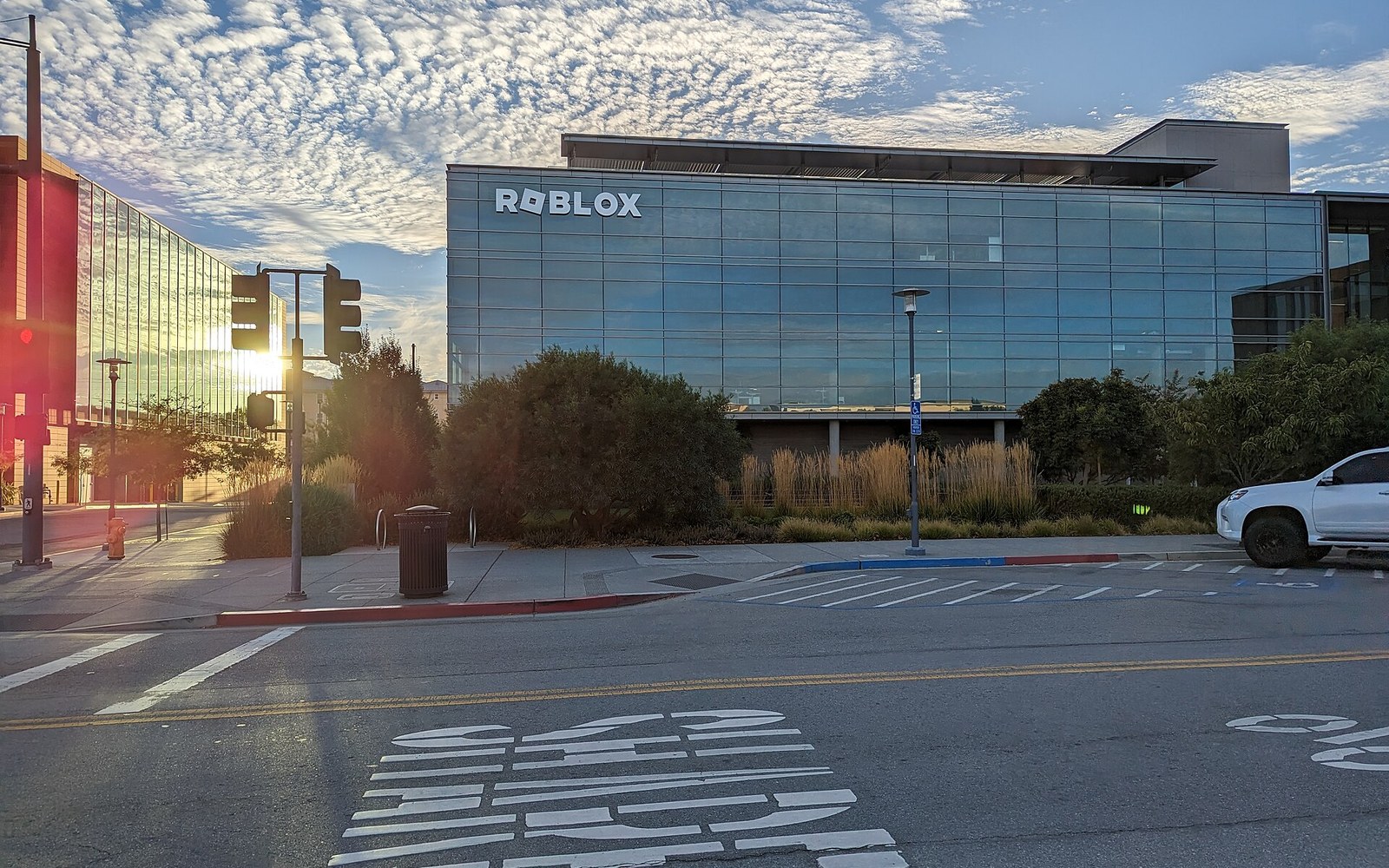
The largest persistent multiplayer platform by users reports its own numbers to the SEC.
Photo: Roblox headquarters · Wikimedia Commons
The numbers are public; the genre label is not
Roblox Corporation's Q4 2024 earnings filing reported daily active users of 85.3 million for the fourth quarter, up from 71.5 million a year earlier. The company does not report a concurrent-user figure every quarter in the CCU sense the MMO industry uses, but its own disclosures of peak simultaneous users have previously exceeded 8 million — a number that dwarfs any single Western MMO and, in aggregate, likely exceeds all of them combined.

Most of the figures on this site were first said out loud in a hall like this, in a slide with a version number on it.
Photo: BlizzCon opening ceremony · Wikimedia Commons
For comparison: World of Warcraft's last published subscriber count, issued before Blizzard stopped releasing the figure after Q1 2015, stood at 5.6 million. EVE Online's all-time PCU record, set in 2013 at roughly 65,000, has never been approached since. Final Fantasy XIV reached 30 million registered accounts — a lifetime figure, not concurrent users. No Western MMO has disclosed a peak simultaneous figure close to Roblox's routine daily load.
Scale in numbers
The classification argument is structural, not aesthetic. Roblox operates a persistent shared world, supports synchronous social play across millions of simultaneous users, hosts an internal economy with a regulated currency (Robux), and runs continuous live-service updates. Every element of the debate over what "MMO" means when a server holds only forty players applies directly. The platform differs from a traditional MMO in one architectural respect: it hosts thousands of discrete game instances rather than a single contiguous world. That distinction — which also describes sharding, the mechanism most modern MMOs use to manage population load — is rarely treated as disqualifying when applied to games that already carry the genre label.
The industry's reluctance to count Roblox as an MMO platform is partly definitional and partly commercial. It is a children's platform by audience composition; its developer ecosystem monetises through Robux, not subscriptions or cosmetic stores in the genre's conventional sense. None of that changes what the SEC filings ↗ actually show.

A live-service calendar is the real product plan: seasons, passes, and the staffing to ship them.
Photo: Anna Shvets / Pexels