Destiny 2 and Warframe Run Every MMO System. They Have Never Used the Word.
Identifies the specific MMO structural elements — shared worlds, gear economies, seasonal content cycles, raid design — operating inside Destiny 2 and Warframe, using each game's own published design documentation and developer talks as sources. An argument about taxonomy.
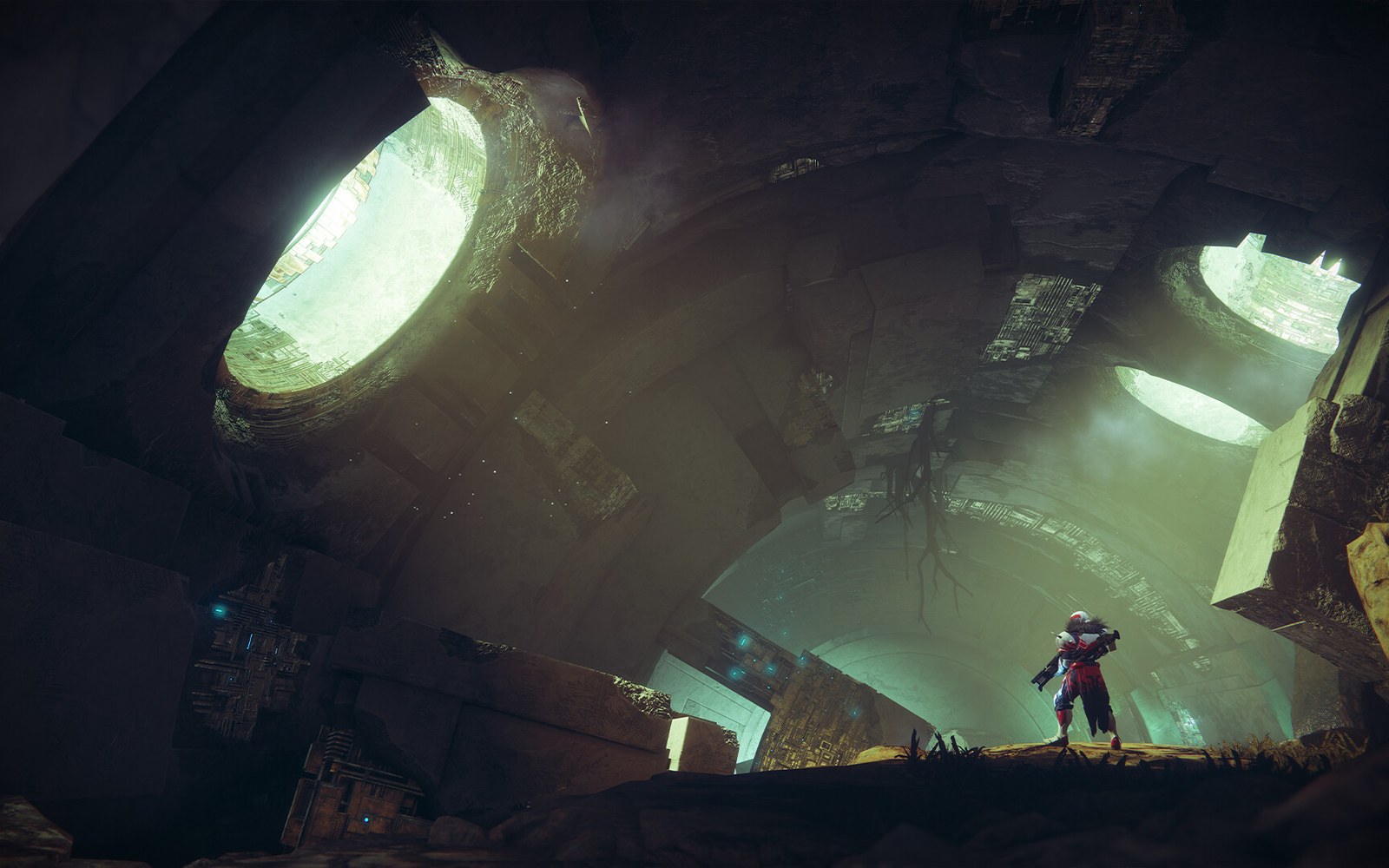
Persistent progression, a seasonal calendar and a shared hub — everything except the label.
Photo: Destiny 2 / Steam
Two of the most-played live-service shooters share a world, rotate seasonal content, gate progression behind group raids, and monetise cosmetics. Blizzard's lawyers could describe all of that. Bungie and Digital Extremes never will.

The convention floor is where a launch window is won or lost, weeks before a chart records the verdict.
Photo: Gamescom 2023 - Cosplay Ankha · Wikimedia Commons
The Architecture Is Not Ambiguous
Destiny 2 operates on a shared-world architecture in which players occupy the same persistent spaces — the Tower, the Helm, patrol zones on Europa or the Throne World — alongside strangers in real time. Bungie's own published design documents for what the studio called its "social spaces" describe a population-management layer that functions, structurally, as sharding: the engine routes players into appropriately populated instances of the same location while presenting the zone as a single seamless world. That is the megaserver pattern. The vocabulary is absent; the engineering is not.
Warframe's equivalent is its Relay system, a set of hub stations where players congregate between missions. Digital Extremes has described Relays explicitly in developer updates as social hubs for commerce, NPC interaction, and community gathering — a design role indistinguishable from the central cities in any subscription MMO. The Plains of Eidolon update in 2017 extended this further by introducing open-world zones where players share space during timed events, completing the structural picture.
Gear Economies, Raid Gates, and the Season Pass
Both games run gear economies with the vertical progression logic — item level, power floor, soft and hard caps — that defines the endgame loop in World of Warcraft or Final Fantasy XIV. Bungie has published explicit Power level roadmaps with each expansion, and Destiny 2's seasonal model tracks almost exactly with the battle-pass cadence now standard across the live-service market: a paid seasonal track, a free tier, cosmetic rewards gated by progression, and a content sunset at season's end that removes purchased material from active rotation. That last mechanism generated significant documented player backlash and a detailed public statement from Bungie in 2020 ↗ explaining the "Destiny Content Vault," the studio's term for what is, operationally, the same content deprecation any MMO uses to manage technical debt.

Most of the figures on this site were first said out loud in a hall like this, in a slide with a version number on it.
Photo: BlizzCon opening ceremony · Wikimedia Commons
Raid design in both titles borrows directly from the MMO template. Destiny 2 raids require six-player coordinated groups, demand role-adjacent specialisation (damage dealers, support builds, designated mechanics players), and gate their best loot behind weekly lockouts — a system Blizzard formalised in vanilla World of Warcraft in 2004. Warframe's raids were discontinued in 2019, but Digital Extremes replaced them with Eidolon hunts and, later, structured multi-stage encounters that preserve the coordination and gear-check functions, if not the formal "raid" label.
Why the Label Gets Avoided
The commercial logic is straightforward. "MMO" carries associations — monthly subscriptions, steep learning curves, time-sink reputation — that both Bungie and Digital Extremes have actively worked against. Warframe is free-to-play and structured to be accessible in short sessions; Destiny 2 abandoned its base-game purchase price in 2019 and shifted fully to a cosmetic-store and expansion model. Neither studio has an interest in invoking a genre whose market peaked, by Newzoo's own historical market-sizing data ↗, well before either game reached its present form.
The avoidance is also partly definitional. Neither game offers the open-ended social infrastructure — player housing, player-driven economies, faction politics — that purists treat as essential to the MMO form. But the operative systems — shared worlds, gear treadmills, seasonal content loops, group-locked endgame content, cosmetic monetisation — are all present and documented in the games' own materials. Taxonomy is a description of what a thing does, not what its makers choose to call it.