Three Business Models, Two Survivors on Subscriptions, and the Numbers Behind the Switch
Compares subscription, battle-pass and cosmetic-store revenue models across named games with attributed revenue figures, explaining why WoW and FFXIV remain the only major western holdouts on monthly fees. A structured comparison piece using public filings and analyst estimates.
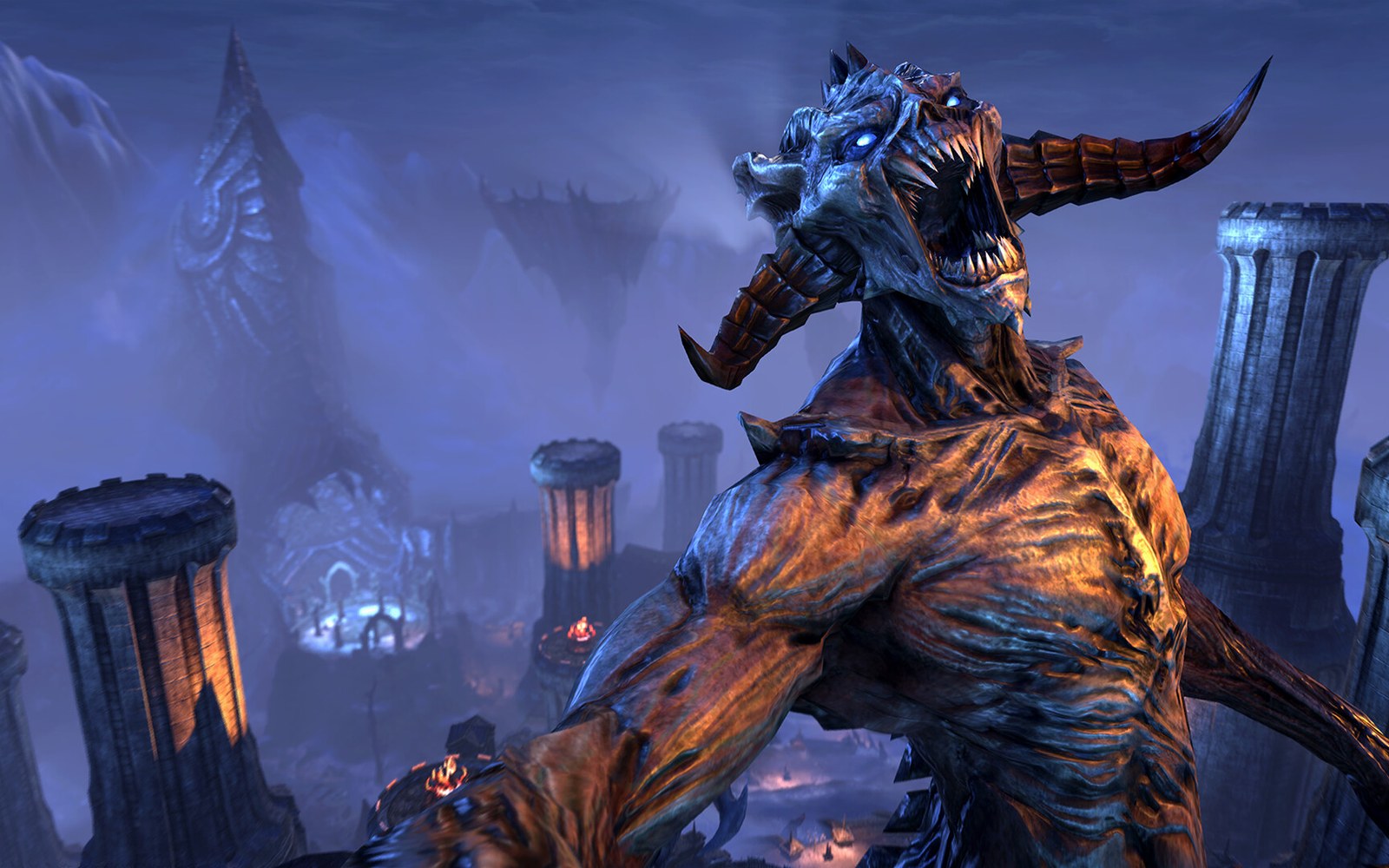
Three ways to charge for the same hours, with different ceilings and different decay curves.
Photo: The Elder Scrolls® Online / Steam
The genre migrated off monthly fees over roughly a decade. The figures explain why — and why two franchises still haven't moved.

Photo: Square Enix logo · Wikimedia Commons
The Subscription Wall Came Down at Different Speeds
World of Warcraft and Final Fantasy XIV are, at this point, the only titles of genuine western commercial scale still charging a mandatory monthly subscription — $14.99 and $12.99 respectively for their base tiers. Every other major competitor that once shared that model has either shut down, converted to free-to-play, or fragmented into hybrid arrangements. That outcome was not inevitable; it was the product of documented revenue pressure measured across several years of public filings and analyst reporting.
The tipping point arrived in stages. Star Wars: The Old Republic launched in December 2011 on a subscription model and converted to free-to-play by November 2012, after Electronic Arts reported subscriber numbers had fallen below 500,000 from a launch-period peak of around 1.7 million. The drop was disclosed in EA's quarterly earnings call and remains one of the most clearly documented subscription collapses in the genre's history. Guild Wars 2 had already pre-empted the problem, launching in August 2012 with no subscription at all, relying from day one on box sales and a cosmetic store — a model ArenaNet has sustained through multiple expansions. The structural lesson was consistent: outside Blizzard and Square Enix, the player base willing to pay monthly was insufficient to sustain a second game at scale.
Blizzard stopped publishing subscriber counts after Q1 2015, when the figure stood at 7.1 million — a decision the company has never reversed. Square Enix's financial disclosures ↗ are more granular: the publisher reports FFXIV's registered-account milestones, which reached 30 million by June 2023, and the subscription segment remains a meaningful contributor to what Square Enix calls its "HD game" operating income. Neither company publishes a real-time active-subscriber figure, but both have continued raising content investment rather than retreating from the model — evidence of internal confidence in the revenue floor the subscription provides.

Photo: Epic Games logo · Wikimedia Commons
Where the Money Actually Moved
The cosmetic-store model that replaced subscriptions for most of the genre is best benchmarked against games that publish or leak usable data. Warframe, operated by Digital Extremes, has operated free-to-play with a cosmetic-focused premium currency since 2013 and disclosed crossing 70 million registered accounts by 2022. Exact annual revenue is not publicly broken out, but parent company Leyou's acquisition by Tencent in 2021 implied a valuation that analysts at the time connected to the game's durable monetisation base.
The battle pass, the second structural alternative to subscriptions, is better illustrated by titles adjacent to the MMO space. Fortnite's Epic Games reported that the game generated roughly $5.1 billion in revenue in 2020 alone, a figure that emerged from litigation documents in Epic's case against Apple ↗ and represents the high-water mark for the battle-pass model at scale. No MMO proper has approached those numbers with a pass-only structure, but the mechanics have migrated: Lost Ark, published in the west by Amazon Games, layers a battle pass over a free-to-play base, and Newzoo's 2023 global games market report estimated the broader live-service segment — which encompasses these hybrid models — at a majority share of total PC and console game revenue.
The two subscription survivors share a factor that the converts largely lacked: deeply embedded social infrastructure and content libraries that have been compounding for over a decade. A player leaving World of Warcraft or FFXIV abandons not just a game but a documented social history, a character record, and in FFXIV's case an elaborately rebuilt world that carries its own narrative weight. That switching cost does not appear in a revenue filing, but its effect does: both games have raised expansion prices without measurable subscriber collapse, which is not behaviour consistent with a price-sensitive audience.
The data, taken together, makes a coherent argument. The cosmetic store won because it removed the barrier to entry. The battle pass won because it manufactured urgency. The subscription endured only where the replacement cost of leaving exceeded the monthly fee — and only two western games have sustained that condition at commercial scale.