The NGE Launched on 15 November 2005. Star Wars Galaxies Never Recovered.
Covers the Star Wars Galaxies New Game Enhancements — announced and deployed simultaneously with no beta — using LucasArts and SOE's dated statements and the documented player-count and forum response that followed. A case study in live-service decision-making as historical record.
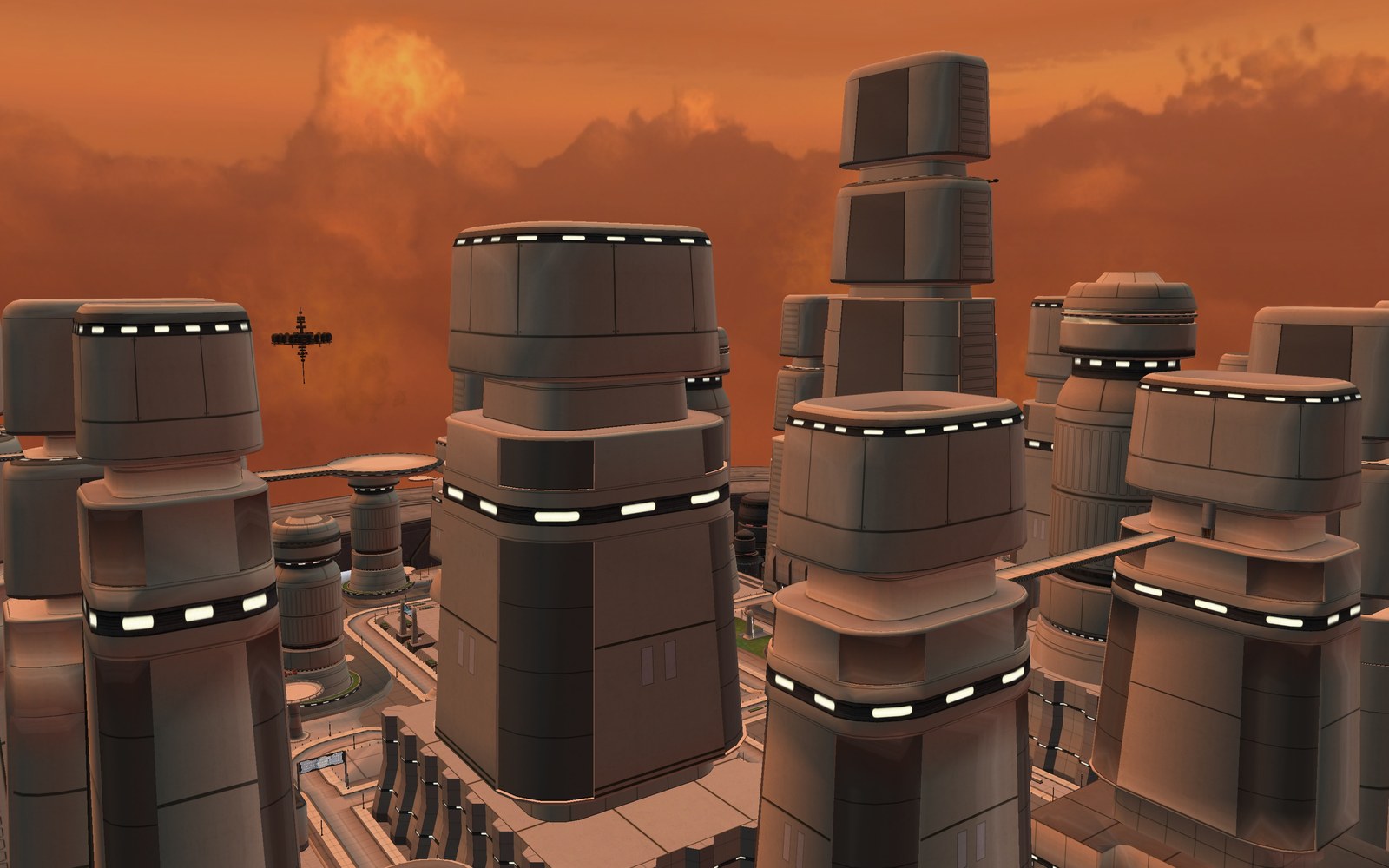
A live game rewritten in place, and the clearest case study in what that costs.
Photo: swglegends.com
A no-beta system overhaul wiped a two-and-a-half-year-old game's design in a single patch — and the player loss was immediate, documented, and irreversible.

Photo: Epic Games logo · Wikimedia Commons
Announcement Came Only Weeks Before Deployment
Star Wars Galaxies launched in June 2003 as a Sony Online Entertainment and LucasArts co-production — a genuinely unusual MMO that let players build a life on Tatooine rather than a combat career. By 2005 the game had accumulated roughly 200,000 active subscribers, a modest but stable figure in the year World of Warcraft was rewriting genre expectations.
Chronology
- June 2003Star Wars Galaxies launches under SOE and LucasArts
- Autumn 2005NGE announced publicly, only weeks before deployment
- 15 November 2005NGE patch goes live; no prior beta or test period
- June 2011SOE announces game closure, citing licensing expiry
- 15 December 2011Star Wars Galaxies shuts down
Only weeks before deployment, Sony Online Entertainment and LucasArts announced the New Game Enhancements publicly. The same patch arrived on 15 November. There was no beta, no test-realm period, no phased rollout. The combat system was replaced wholesale; the profession system, which had supported thirty-two playable classes including the non-combat Entertainer and Medic archetypes, was collapsed into nine combat-focused templates. Jedi, previously a rare achievement requiring months of in-game work, became a starting class. The announcement cited an intent to bring the game closer to the tone of the films and to lower the barrier to entry for new players.
The existing playerbase read it as the erasure of everything they had built. Forum posts on the official SOE boards — archived by community members and subsequently documented by gaming historians — described players cancelling subscriptions within hours of the patch going live. SOE's own customer-service staff, in internal communications that later became public through former-employee accounts, reported a volume of cancellation calls that overwhelmed their queues in the first 48 hours.

Sharding, megaservers and regional clusters are a cost decision before they are a design one.
Photo: panumas nikhomkhai / Pexels
The Trajectory After November 2005 Never Reversed
SOE did not publish granular subscriber figures for Galaxies. What is on the record, through a combination of executive statements and the eventual shutdown announcement, is a trajectory that never reversed. John Smedley, then president of SOE, acknowledged in later interviews that the NGE had failed to attract the new players it was designed to win while accelerating the departure of existing ones — a net outcome the studio had not modelled. LucasArts' internal rationale, partially reconstructed through accounts given by former developers in the years after the game's closure, was driven by the afterglow of the Star Wars Episode III release and a belief that the game needed a mass-market reset to capitalise on renewed film interest.
The reset did not produce a mass market. By the time SOE announced the game's closure in June 2011, setting a shutdown date of 15 December 2011, the subscriber count had declined to a fraction of its pre-NGE level, with estimates from community-tracking efforts suggesting fewer than 50,000 active accounts in the game's final years — though SOE never confirmed a terminal figure. The shutdown notice itself acknowledged the expiry of the LucasArts licensing agreement as the proximate cause, but the game's commercial trajectory had been set six years earlier.
What the NGE Established as a Genre Case Study
The New Game Enhancements entered the vocabulary of live-service decision-making as a shorthand for a specific class of error: a fundamental redesign deployed without a transition period, targeted at an audience that did not yet exist, at the cost of the audience that did. Richard Bartle, the co-creator of MUD1 at the University of Essex and a persistent critic of MMO design decisions that treat players as interchangeable, cited the NGE in academic discussions as evidence that virtual worlds carry obligations to their existing populations that straight product-management logic does not capture.
The case recurs in developer post-mortems for a structural reason: the NGE compressed into a single patch the trade-off that most live-service games manage across years — legacy player retention versus new-player acquisition. SOE chose new players. The patch notes are dated 15 November 2005. The shutdown notice is dated June 2011. The distance between those two documents is the argument.